Imperial Wild Boar Kung Fu is one of the Eight Animal paradigms preserved and taught at Imperial Combat Arts. Within the integrated Animal system, Wild Boar represents the forward-pressure and structural collision category of combat.
Boar training emphasizes reinforced alignment, compact striking surfaces, close-range power, and sustained forward engagement. Rather than relying on evasion or extended grappling exchanges, Boar develops the ability to enter decisively, maintain structure under resistance, and apply controlled force at short range.
As with all Imperial Animal systems, Wild Boar is taught as a complete martial discipline integrating striking, clinch work, grappling, Chin Na (joint control), ground engagement, and weapons training within a unified framework.
Boar training emphasizes reinforced alignment, compact striking surfaces, close-range power, and sustained forward engagement. Rather than relying on evasion or extended grappling exchanges, Boar develops the ability to enter decisively, maintain structure under resistance, and apply controlled force at short range.
As with all Imperial Animal systems, Wild Boar is taught as a complete martial discipline integrating striking, clinch work, grappling, Chin Na (joint control), ground engagement, and weapons training within a unified framework.
DESIGN INTENT
Wild Boar was preserved within the Eight Animal structure as the collision-and-drive paradigm.
Its design prioritizes:
Boar mechanics train the practitioner to maintain alignment while driving forward, applying disciplined pressure rather than uncontrolled aggression. The emphasis is structural commitment — not emotional volatility.
Its design prioritizes:
- Direct entry and pressure
- Reinforced skeletal alignment
- Compact power generation
- Close-range striking surfaces (thumb, knuckle, elbow, knee)
- Structural resilience during contact
Boar mechanics train the practitioner to maintain alignment while driving forward, applying disciplined pressure rather than uncontrolled aggression. The emphasis is structural commitment — not emotional volatility.
TRAINING BOAR KUNG FU
Wild Boar training follows the structured progression model used throughout Imperial Combat Arts. Conditioning and durability are developed progressively to ensure long-term joint health and safe skill acquisition.
Training includes:
• Progressive Thumb and Knuckle Conditioning
Systematic development of reinforced thumb alignment and single-knuckle structure through controlled impact training and alignment drills.
• Structural Collision Mechanics
Partner training that develops safe application of body-weight pressure, clinch drive, and short-range force expression.
• Compact Power Development
Exercises emphasizing short-range impact, elbow and knee integration, and whole-body alignment.
• Forms and Applied Sets
Boar forms encode direct and compact movement patterns. Partner sets develop pressure tolerance, balance integrity, and controlled structural application.
• Controlled Matching
Supervised application training builds composure and adaptability under resistance while maintaining safety and technical discipline.
• Boar Mind
Boar training cultivates disciplined intensity and committed forward intent.
• Weapons Integration
Training in traditional and applied weapons that reinforce Boar’s close-range mechanics and structural drive.
Training includes:
• Progressive Thumb and Knuckle Conditioning
Systematic development of reinforced thumb alignment and single-knuckle structure through controlled impact training and alignment drills.
• Structural Collision Mechanics
Partner training that develops safe application of body-weight pressure, clinch drive, and short-range force expression.
• Compact Power Development
Exercises emphasizing short-range impact, elbow and knee integration, and whole-body alignment.
• Forms and Applied Sets
Boar forms encode direct and compact movement patterns. Partner sets develop pressure tolerance, balance integrity, and controlled structural application.
• Controlled Matching
Supervised application training builds composure and adaptability under resistance while maintaining safety and technical discipline.
• Boar Mind
Boar training cultivates disciplined intensity and committed forward intent.
• Weapons Integration
Training in traditional and applied weapons that reinforce Boar’s close-range mechanics and structural drive.
DEMONSTRATION & CONDITIONING
Wild Boar is known within Imperial Combat Arts for its reinforced thumb and knuckle striking surfaces. Senior instructors routinely demonstrate structural thumb alignment by striking stacked pine boards and other dense targets under controlled conditions.
These demonstrations are not theatrical displays but visible indicators of long-term conditioning, joint reinforcement, and structural power development achieved through disciplined progression.
Impact training is introduced gradually and scaled appropriately to protect joint integrity and long-term practitioner longevity.
These demonstrations are not theatrical displays but visible indicators of long-term conditioning, joint reinforcement, and structural power development achieved through disciplined progression.
Impact training is introduced gradually and scaled appropriately to protect joint integrity and long-term practitioner longevity.
BOAR SUBSTYLES
Within Imperial Combat Arts, Wild Boar is supported by complementary sub-styles that reinforce its structural identity.
• Golden Rat — Emphasizes compact grip mechanics, reinforced finger alignment, and close-range structural control.
• Canton Dog — Develops low-level engagement and ground transition mechanics consistent with Boar’s close-contact emphasis.
These sub-styles are trained as extensions of Boar’s principles rather than as separate systems.
• Golden Rat — Emphasizes compact grip mechanics, reinforced finger alignment, and close-range structural control.
• Canton Dog — Develops low-level engagement and ground transition mechanics consistent with Boar’s close-contact emphasis.
These sub-styles are trained as extensions of Boar’s principles rather than as separate systems.
HISTORICAL CONTEXT
Animal symbolism has long been used in Chinese martial culture to represent tactical qualities rather than literal imitation. Across cultures, the wild boar has symbolized courage, resilience, and relentless forward movement.
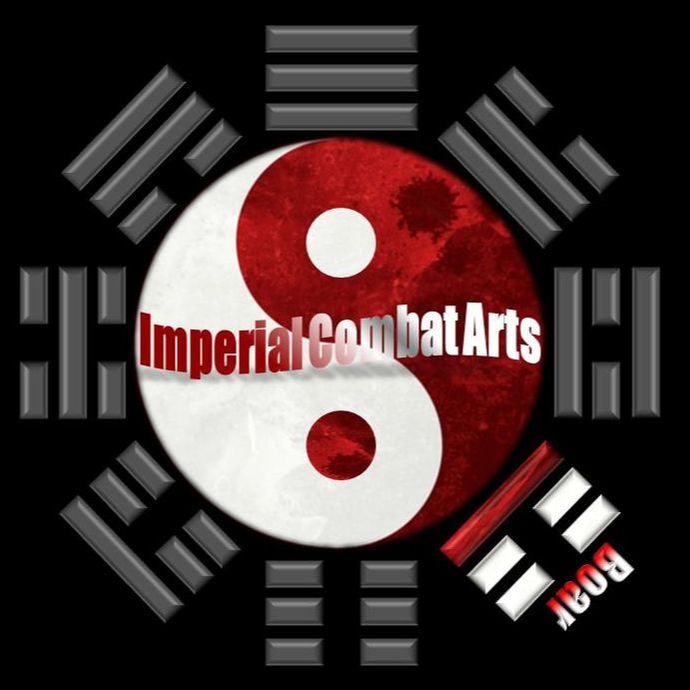
Within the Eight Animal framework, Wild Boar was integrated as the paradigm representing structural drive and initiative. Its association with the trigram Chen (☳), symbolizing dynamic movement and activation within the Bagua model, reflects its tactical identity within the system.
Within the Eight Animal framework, Wild Boar was integrated as the paradigm representing structural drive and initiative. Its association with the trigram Chen (☳), symbolizing dynamic movement and activation within the Bagua model, reflects its tactical identity within the system.
HISTORICAL TRANSMISSION
The Eight Animal framework, including Wild Boar, was transmitted to the United States in the early 1960s through direct lineage instruction. Internal tradition associates the Eight Animal structure with late traditional Chinese martial culture and Taoist classification models common during the Qing period.
As with many martial systems of that era, preservation occurred primarily through direct instruction and oral transmission rather than extensive written documentation. At Imperial Combat Arts, Wild Boar is presented as the forward-pressure paradigm within the integrated Eight Animal system.
As with many martial systems of that era, preservation occurred primarily through direct instruction and oral transmission rather than extensive written documentation. At Imperial Combat Arts, Wild Boar is presented as the forward-pressure paradigm within the integrated Eight Animal system.
BOAR WITHIN THE 8 ANIMALS
|
Imperial Wild Boar is one of eight complete Animal paradigms taught at Imperial Combat Arts. Each Animal represents a tactical category within a unified training system rather than an isolated public lineage.
Wild Boar corresponds to Chen (☳) within the Bagua model, symbolizing initiative and dynamic force. Within the Eight Animal structure, Boar represents disciplined forward engagement supported by conditioning and structural alignment. |
|