Imperial Panther Kung Fu is one of the Eight Animal paradigms preserved and taught at Imperial Combat Arts. Within the integrated Animal system, Panther represents the balanced-force and entanglement category of combat—emphasizing compact power, structural redirection, and controlled disruption against opponents of similar size and strength.
Panther training develops pressure-based mechanics, close-range engagement, and decisive body integration. Rather than relying on overwhelming force or evasive speed alone, Panther refines the ability to control momentum, manipulate structure, and apply compact impact at decisive moments.
As with all Imperial Animal systems, Panther is trained as a complete martial discipline integrating striking, grappling, Chin Na (joint control), ground engagement, and weapons work within a unified framework.
Panther training develops pressure-based mechanics, close-range engagement, and decisive body integration. Rather than relying on overwhelming force or evasive speed alone, Panther refines the ability to control momentum, manipulate structure, and apply compact impact at decisive moments.
As with all Imperial Animal systems, Panther is trained as a complete martial discipline integrating striking, grappling, Chin Na (joint control), ground engagement, and weapons work within a unified framework.
DESIGN INTENT
Panther was preserved within the Eight Animal structure as a response to balanced-force engagement. Where Tiger expresses structural dominance and Leopard emphasizes speed against larger force, Panther refines engagement against comparable resistance.
Its design prioritizes push–pull mechanics, entanglement, structural compromise, and short-range power expression. Panther practitioners are trained to remain composed within contact range, redirecting pressure and converting momentum into compact force.
Advanced practitioners are taught to shift between the Cat paradigms—Tiger, Panther, and Leopard—according to changing force dynamics rather than remaining fixed in a single expression.
Its design prioritizes push–pull mechanics, entanglement, structural compromise, and short-range power expression. Panther practitioners are trained to remain composed within contact range, redirecting pressure and converting momentum into compact force.
Advanced practitioners are taught to shift between the Cat paradigms—Tiger, Panther, and Leopard—according to changing force dynamics rather than remaining fixed in a single expression.
TRAINING PANTHER KUNG FU
Imperial Panther training follows the same progressive and structured development model used throughout Imperial Combat Arts. Emphasis is placed on durability, precision, and controlled pressure application.
Training includes:
• Progressive Hand and Body Toughening
Systematic development of knuckle structure, grip strength, forearm durability, and impact tolerance using supervised methods designed for long-term joint integrity.
• Compact Power Development
Exercises emphasizing short-range force, body integration, and structural redirection rather than extended striking.
• Structural Push–Pull Mechanics
Partner drills that refine entanglement, redirection, balance disruption, and positional control under resistance.
• Forms and Applied Sets
Structured forms encode Panther’s compact movement patterns, while partner sets develop timing, pressure sensitivity, and controlled application.
• Terrain and Environment Adaptation
Supervised training on uneven surfaces and confined spaces to develop stability, structural awareness, and composure outside ideal training conditions.
• Weapons Integration
Training in traditional and applied weapons that reinforce Panther’s close-range control, structure, and angular engagement principles.
Training includes:
• Progressive Hand and Body Toughening
Systematic development of knuckle structure, grip strength, forearm durability, and impact tolerance using supervised methods designed for long-term joint integrity.
• Compact Power Development
Exercises emphasizing short-range force, body integration, and structural redirection rather than extended striking.
• Structural Push–Pull Mechanics
Partner drills that refine entanglement, redirection, balance disruption, and positional control under resistance.
• Forms and Applied Sets
Structured forms encode Panther’s compact movement patterns, while partner sets develop timing, pressure sensitivity, and controlled application.
• Terrain and Environment Adaptation
Supervised training on uneven surfaces and confined spaces to develop stability, structural awareness, and composure outside ideal training conditions.
• Weapons Integration
Training in traditional and applied weapons that reinforce Panther’s close-range control, structure, and angular engagement principles.
HAND WEAPON EMPHASIS
Panther emphasizes compact striking surfaces such as reinforced knuckle formations and structured palm variations designed for close-range application. Training develops joint conditioning, grip integrity, and impact tolerance through progressive methods.
Impact training is introduced methodically and scaled appropriately to ensure structural development without compromising long-term health. Techniques are always trained under supervision and within a disciplined progression model.
Panther’s hand development supports its core tactical function: structural disruption and controlled engagement at close range.
Impact training is introduced methodically and scaled appropriately to ensure structural development without compromising long-term health. Techniques are always trained under supervision and within a disciplined progression model.
Panther’s hand development supports its core tactical function: structural disruption and controlled engagement at close range.
DEMONSTRATION & CONDITIONING
Imperial Panther conditions full-body structural engagement, reinforced claw strikes, and collision mechanics. Demonstrations often include controlled impact against moving targets and structural landing mechanics from dynamic entries.
Training emphasizes durability, balance under terrain variation, and controlled application of body-weight force.
Training emphasizes durability, balance under terrain variation, and controlled application of body-weight force.
PANTHER SUBSTYLES
Within Imperial Combat Arts, Panther is supported by complementary sub-styles that reinforce its structural and tactical emphasis.
• Northern Wolf — Emphasizes coordinated pressure, group movement dynamics, and low-level engagement strategies.
• Lion — Develops heavy claw-based mechanics, grounded power, and commanding structural presence.
• Rhino — Focuses on direct, compact force expression and reinforced knuckle alignment within short-range striking.
These sub-styles are trained as extensions of Panther’s principles rather than as separate system
• Northern Wolf — Emphasizes coordinated pressure, group movement dynamics, and low-level engagement strategies.
• Lion — Develops heavy claw-based mechanics, grounded power, and commanding structural presence.
• Rhino — Focuses on direct, compact force expression and reinforced knuckle alignment within short-range striking.
These sub-styles are trained as extensions of Panther’s principles rather than as separate system
HISTORICAL TRANSMISSION
The Eight Animal framework, including Panther, was transmitted to the United States in the early 1960s by a Chinese instructor who preserved this integrated structure through direct lineage training.
While detailed external documentation of the Panther category as an independent public system is limited, internal tradition associates the Eight Animal framework with late Qing martial culture and Taoist classification models common in 19th and early 20th century China.
As with many martial traditions of that period, preservation occurred primarily through direct instruction and oral transmission rather than written record.
Imperial Panther Kung Fu is therefore presented not as an isolated historical style, but as a preserved tactical category within a larger, integrated martial system.
While detailed external documentation of the Panther category as an independent public system is limited, internal tradition associates the Eight Animal framework with late Qing martial culture and Taoist classification models common in 19th and early 20th century China.
As with many martial traditions of that period, preservation occurred primarily through direct instruction and oral transmission rather than written record.
Imperial Panther Kung Fu is therefore presented not as an isolated historical style, but as a preserved tactical category within a larger, integrated martial system.
WITHIN THE 8 ANIMALS
|
Imperial Panther Within the Eight AnimalsImperial Panther is one of eight complete Animal paradigms taught at Imperial Combat Arts. Each Animal represents a tactical expression within a unified system rather than an unrelated stylistic branch.
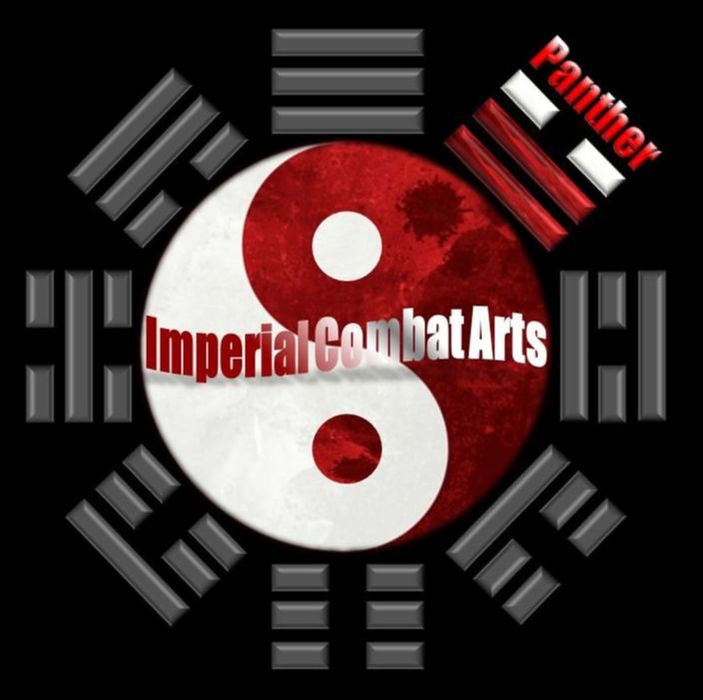
Panther corresponds to Tui (☱) within the Bagua model, symbolizing controlled openness and adaptive pressure. Within the Cat triad, Panther represents balanced-force engagement—bridging the structural dominance of Tiger and the speed emphasis of Leopard. Advanced practitioners are trained to understand and transition between these paradigms as conditions require. |
|