Imperial Tiger Kung Fu is a traditional combat-oriented martial art taught at Imperial Combat Arts. Rooted in classical Chinese Tiger systems, this discipline emphasizes structural power, disciplined conditioning, and direct application. Training is progressive, demanding, and designed for long-term development rather than performance or sport competition.
Imperial Tiger Kung Fu is preserved and taught as a complete martial system, integrating empty-hand combat, grappling, joint control, ground fighting, and weapons training within a unified curriculum.
Imperial Tiger Kung Fu is preserved and taught as a complete martial system, integrating empty-hand combat, grappling, joint control, ground fighting, and weapons training within a unified curriculum.
DESIGN INTENT
Tiger Kung Fu was developed for close-range environments where control, pressure, and sustained force were required to overcome resistance. Its design prioritizes structural alignment, gripping strength, and whole-body force transmission over speed or evasion, allowing practitioners to impose control under physical contact and constraint.
Tiger training emphasizes durability, repeatable power, and the ability to function under load, reflecting its original purpose as a system for direct engagement rather than performance or regulated exchange.
Tiger training emphasizes durability, repeatable power, and the ability to function under load, reflecting its original purpose as a system for direct engagement rather than performance or regulated exchange.
WHAT IS TIGER KUNG FU
Tiger Style Kung Fu is historically known for its emphasis on strength, structure, and decisive force. Unlike lighter or more evasive systems, Tiger training develops the ability to dominate space at close range through powerful stances, gripping strength, and whole-body mechanics.
Traditional Tiger Kung Fu is not acrobatic or ornamental. It is grounded, direct, and physically demanding, with conditioning and structure forming the foundation of all techniques.
Traditional Tiger Kung Fu is not acrobatic or ornamental. It is grounded, direct, and physically demanding, with conditioning and structure forming the foundation of all techniques.
THE TIGER KUNG FU SYSTEM
Imperial Tiger Kung Fu is trained as an integrated system rather than a collection of techniques. Practitioners develop skills across all ranges of combat, including striking, clinch work, throws, grappling, and ground engagement.
Training also includes Chin Na (joint control), conditioning, and weapons instruction, allowing Tiger practitioners to apply their skills across varied scenarios while maintaining continuity of movement and principle.
Training also includes Chin Na (joint control), conditioning, and weapons instruction, allowing Tiger practitioners to apply their skills across varied scenarios while maintaining continuity of movement and principle.
suItable practioners
Imperial Tiger Kung Fu is well suited for practitioners who value structure, intensity, and disciplined physical development. Tiger training attracts individuals drawn to direct engagement, conditioning-based skill acquisition, and the cultivation of decisive presence through sustained practice.
Tiger Kung Fu is not intended for those seeking casual training, rapid results, or sport-focused instruction. Progress requires resilience, consistency, and the willingness to engage in demanding physical and mental training over time.
Tiger Kung Fu is not intended for those seeking casual training, rapid results, or sport-focused instruction. Progress requires resilience, consistency, and the willingness to engage in demanding physical and mental training over time.
THE FIVE IMPERIAL STYLES
Imperial Tiger Kung Fu is composed of five primary Tiger styles that function together as one integrated martial system. Each style emphasizes distinct attributes while maintaining shared structural principles.
- Northern Tiger Kung Fu — Emphasizes structural power, grip strength, and decisive force through coordinated body mechanics and progressive conditioning.
- Shanghai Tiger Kung Fu — Develops refined hand intelligence, finger strength, and detailed gripping methods supporting advanced Chin Na application.
- Southern Tiger Kung Fu — Focuses on speed, compact power, and efficient close-range engagement while maintaining Tiger’s characteristic intensity.
- Black Tiger Kung Fu — Trains tactical awareness, positioning, and adaptive movement rooted in historical battlefield principles.
- White Tiger Kung Fu — Specializes in asymmetric training and single-limb dominance, maintaining effectiveness when one arm is occupied or compromised.
SUPPORTING STYLES
Advanced Imperial Tiger practitioners train complementary Animal Kung Fu sub-styles that reinforce Tiger principles through shared structure, conditioning methods, and tactical emphasis. These sub-styles are not taught as separate systems, but as integrated extensions of Tiger training.
Imperial Tiger Sub-Styles include:
These sub-styles share compatible movement patterns, conditioning requirements, and combat mechanics with Tiger Kung Fu, allowing advanced practitioners to expand capability without fragmenting their core training.
Imperial Tiger Sub-Styles include:
- Bear Kung Fu — Grappling, standing wrestling, body control, and crushing close-range pressure
- Rhino (Unicorn) Kung Fu — Forward drive, structural stability, ramming force, and reinforced hand formations
- Bull Kung Fu — Impact power, collisions, elbow strikes, and full-body momentum
- Elephant Kung Fu — Rooted structure, mass control, balance disruption, and sustained forward pressure
These sub-styles share compatible movement patterns, conditioning requirements, and combat mechanics with Tiger Kung Fu, allowing advanced practitioners to expand capability without fragmenting their core training.
TRAINING TIGER KUNG FU
Imperial Tiger Kung Fu is trained through a progressive, methodical process designed to develop strength, structure, and functional skill over time. Training emphasizes durability, control, and real-world application rather than speed of advancement.
Imperial Tiger training includes:
This approach ensures that Tiger Kung Fu is learned as a complete martial system, with physical, technical, and mental development progressing together.
Imperial Tiger training includes:
- Progressive Conditioning & Toughening
Systematic development of the hands, arms, legs, and body using time-tested methods that prioritize long-term joint health and structural integrity.
- Tiger-Specific Strength & Movement Exercises
Specialized exercises that build explosive power, coordination, and stability directly related to Tiger combat mechanics, not general fitness.
- Tiger Forms
Short, demanding forms focused on power generation, guarded structure, and practical technique rather than decorative movement or acrobatics.
- Partner Sets & Applied Drills
Structured partner training to develop timing, pressure control, and technical precision while reinforcing discipline and safety.
- Matching Practice
Controlled application training that develops adaptability, composure, and awareness under pressure, appropriate to advanced animal-style practice.
- Weapons Training
Instruction in traditional battlefield weapons and applied modern weapon contexts, reinforcing Tiger’s empty-hand mechanics through the use of blades, impact weapons, and long arms.
- Animal Sub-Style Integration
Training in complementary Animal Kung Fu sub-styles—such as Bear, Rhino, Bull, and Elephant—that reinforce Tiger principles through shared structure, conditioning, and tactical emphasis.
- The Tiger Mind
Mental conditioning focused on discipline, intent, and composure, developing the ability to transition from calm awareness to decisive action under pressure.
This approach ensures that Tiger Kung Fu is learned as a complete martial system, with physical, technical, and mental development progressing together.
HAND TOUGHENING
In Imperial Tiger Kung Fu, hand toughening is developed through a combination of structural conditioning and controlled impact training. Conditioning trains the hands, forearms, and supporting skeletal alignment to transmit force through the entire body, while progressive impact work hardens striking surfaces and reinforces structural integrity under load.
Impact training is introduced methodically and increased over time, ensuring that bone density, connective tissue, and joint alignment adapt together. Practitioners routinely demonstrate force output exceeding bodyweight through integrated structure and conditioned contact rather than isolated muscular effort.
Tiger hand weapons emphasize gripping, pressure, and sustained force application at close range. Toughening is inseparable from stance work, posture, and whole-body coordination, allowing force to be applied repeatedly against resistance without degradation. This approach ensures that Tiger hand weapons are durable, measurable, and functional, not symbolic or theoretical.
Impact training is introduced methodically and increased over time, ensuring that bone density, connective tissue, and joint alignment adapt together. Practitioners routinely demonstrate force output exceeding bodyweight through integrated structure and conditioned contact rather than isolated muscular effort.
Tiger hand weapons emphasize gripping, pressure, and sustained force application at close range. Toughening is inseparable from stance work, posture, and whole-body coordination, allowing force to be applied repeatedly against resistance without degradation. This approach ensures that Tiger hand weapons are durable, measurable, and functional, not symbolic or theoretical.
DEMONSTRATION & CONDITIONING
Imperial Tiger training emphasizes reinforced gripping structure, forearm alignment, and close-range impact capacity. Senior practitioners routinely demonstrate controlled throat-grip mechanics, heavy bag penetration, and structural arm conditioning against dense targets.
Impact training is introduced progressively and supervised to ensure joint integrity and long-term development. Demonstrations reflect disciplined conditioning — not spectacle.
Impact training is introduced progressively and supervised to ensure joint integrity and long-term development. Demonstrations reflect disciplined conditioning — not spectacle.
INSTRUCTION & PROGRESSION
Imperial Tiger Kung Fu is taught through direct instruction, progressive conditioning, and supervised application. Training is governed by structural readiness rather than time-based advancement, ensuring that physical preparation and technical development progress together.
Instruction begins with foundational alignment, stance development, and controlled conditioning before advancing into integrated gripping, clinch control, and applied force training. Impact and resistance are introduced progressively and only when structural integrity can be maintained.
Advancement is based on demonstrated control, repeatable force transmission, and the ability to apply Tiger principles under pressure. This method preserves the historical function of Tiger Kung Fu while ensuring that training remains disciplined, responsible, and sustainable.
Instruction begins with foundational alignment, stance development, and controlled conditioning before advancing into integrated gripping, clinch control, and applied force training. Impact and resistance are introduced progressively and only when structural integrity can be maintained.
Advancement is based on demonstrated control, repeatable force transmission, and the ability to apply Tiger principles under pressure. This method preserves the historical function of Tiger Kung Fu while ensuring that training remains disciplined, responsible, and sustainable.
HISTORY & EVOLUTION
Tiger Kung Fu developed as a structural combat system shaped by historical environments where protective equipment, regulated engagement, and guaranteed safety did not exist. Rather than evolving as a sport or performance art, Tiger methods emphasized close-range dominance, structural control, and the ability to impose force under resistance.
Historically, Tiger training prioritized skeletal alignment, gripping strength, and whole-body integration to function reliably against armored or physically stronger opponents. These methods evolved through practical necessity, favoring repeatable structure over isolated techniques and disciplined conditioning over short-term strength.
Imperial Tiger Kung Fu at Imperial Combat Arts represents a modern consolidation of these principles. The system preserves Tiger’s original design intent while adapting training methods to contemporary standards of supervision, progression, and long-term practitioner longevity.
Historically, Tiger training prioritized skeletal alignment, gripping strength, and whole-body integration to function reliably against armored or physically stronger opponents. These methods evolved through practical necessity, favoring repeatable structure over isolated techniques and disciplined conditioning over short-term strength.
Imperial Tiger Kung Fu at Imperial Combat Arts represents a modern consolidation of these principles. The system preserves Tiger’s original design intent while adapting training methods to contemporary standards of supervision, progression, and long-term practitioner longevity.
HISTORICAL TRANSMISSION
The Eight Animal framework, including Tiger, was transmitted to the United States in the early 1960s through direct lineage instruction. Internal tradition associates the structure of the Eight Animals with late traditional Chinese martial culture and Taoist classification models common during the Qing period.
As with many martial systems of that era, preservation occurred primarily through direct instruction and oral transmission rather than extensive written documentation. At Imperial Combat Arts, Tiger is presented as a preserved force-dominant paradigm within the integrated Eight Animal system.
As with many martial systems of that era, preservation occurred primarily through direct instruction and oral transmission rather than extensive written documentation. At Imperial Combat Arts, Tiger is presented as a preserved force-dominant paradigm within the integrated Eight Animal system.
WITHIN THE 8 ANIMALS
|
Imperial Tiger Kung Fu is one of eight complete Animal Styles taught at Imperial Combat Arts. Each Animal represents a distinct combat paradigm within a unified system, developed to address different tactical environments and engagement demands.
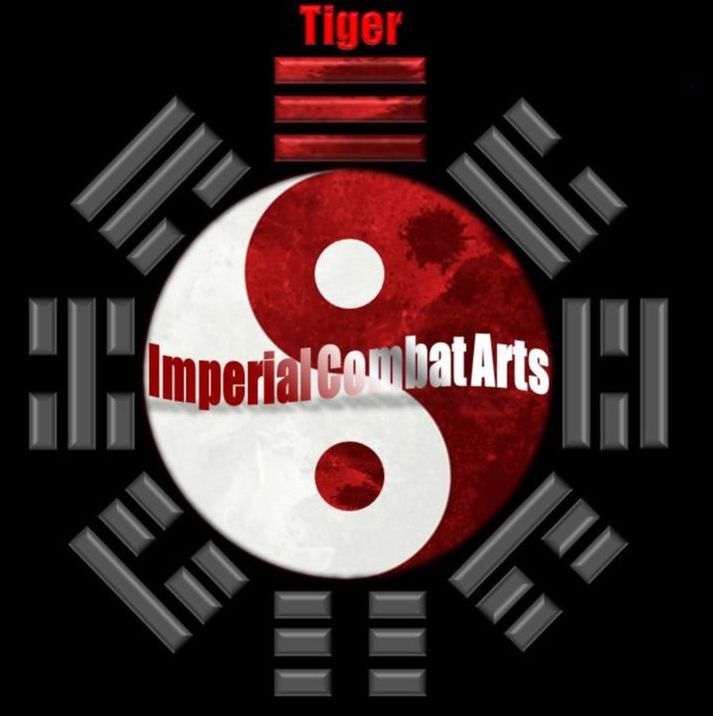
Tiger corresponds to Ch’ien (☰), symbolizing force, structure, and creative power. Within the Eight Animal framework, Tiger represents the most structurally assertive expression—emphasizing alignment, pressure, and the ability to impose control at close range. While each Animal system is complete in its own right, Tiger’s role within the Eight Animals is to embody structural dominance and sustained force application. Together, the Eight Animals preserve a comprehensive martial curriculum designed to function across varied conditions while maintaining consistent training standards and ethical responsibility. |
|