
FIREARMS MECHANICS & TACTICAL INTEGRATION
Defensive Firearms Mechanics & Movement – Colorado
Imperial Combat Arts teaches firearms handling and defensive mechanics using non-lethal training platforms in a controlled classroom environment.
Our focus is on:
• Safe handling discipline
• Structural shooting fundamentals
• Weapon manipulation
• Reloading procedures
• Malfunction clearing concepts
• Movement and positioning
• Use of cover
• Scenario-based decision making
We do not operate a live-fire range. Students who wish to pursue live-fire qualification are referred to certified instructors and professional shooting facilities.
Our program emphasizes that the majority of shooting proficiency is developed through correct repetition of mechanics — not volume of ammunition.
Imperial Combat Arts teaches firearms handling and defensive mechanics using non-lethal training platforms in a controlled classroom environment.
Our focus is on:
• Safe handling discipline
• Structural shooting fundamentals
• Weapon manipulation
• Reloading procedures
• Malfunction clearing concepts
• Movement and positioning
• Use of cover
• Scenario-based decision making
We do not operate a live-fire range. Students who wish to pursue live-fire qualification are referred to certified instructors and professional shooting facilities.
Our program emphasizes that the majority of shooting proficiency is developed through correct repetition of mechanics — not volume of ammunition.
MARTIAL STRUCTURE & FIREARMS SKILL
At Imperial Combat Arts, firearms skill is trained as an extension of martial structure rather than as a standalone activity. The same principles that govern striking, weapons handling, and multi-opponent positioning — alignment, breath control, skeletal support, grip integrity, and movement under pressure — directly transfer to modern defensive tools.
A martial artist who understands structure does not merely “hold” a firearm. He stabilizes it through skeletal alignment. He does not panic under pressure. He maintains positional awareness and environmental control.
Firearms mechanics, like empty-hand technique, depend on disciplined repetition, controlled breathing, and precise body integration.
In this way, firearms training remains consistent with the larger martial framework rather than separate from it.
A martial artist who understands structure does not merely “hold” a firearm. He stabilizes it through skeletal alignment. He does not panic under pressure. He maintains positional awareness and environmental control.
Firearms mechanics, like empty-hand technique, depend on disciplined repetition, controlled breathing, and precise body integration.
In this way, firearms training remains consistent with the larger martial framework rather than separate from it.
TRAINING STRUCTURE
Firearms training at Imperial Combat Arts is integrated into our broader martial framework and taught as:
• Defensive tool handling
• Close-range awareness
• Movement under stress
• Coordination with empty-hand skills
• Environmental positioning
Instruction is conducted using realistic training replicas that allow safe repetition of:
• Draw stroke mechanics
• Indexing and sight alignment
• Trigger discipline
• Reloading
• Transition drills
• Positional work
This approach builds neuromuscular efficiency before live-fire confirmation.
• Defensive tool handling
• Close-range awareness
• Movement under stress
• Coordination with empty-hand skills
• Environmental positioning
Instruction is conducted using realistic training replicas that allow safe repetition of:
• Draw stroke mechanics
• Indexing and sight alignment
• Trigger discipline
• Reloading
• Transition drills
• Positional work
This approach builds neuromuscular efficiency before live-fire confirmation.
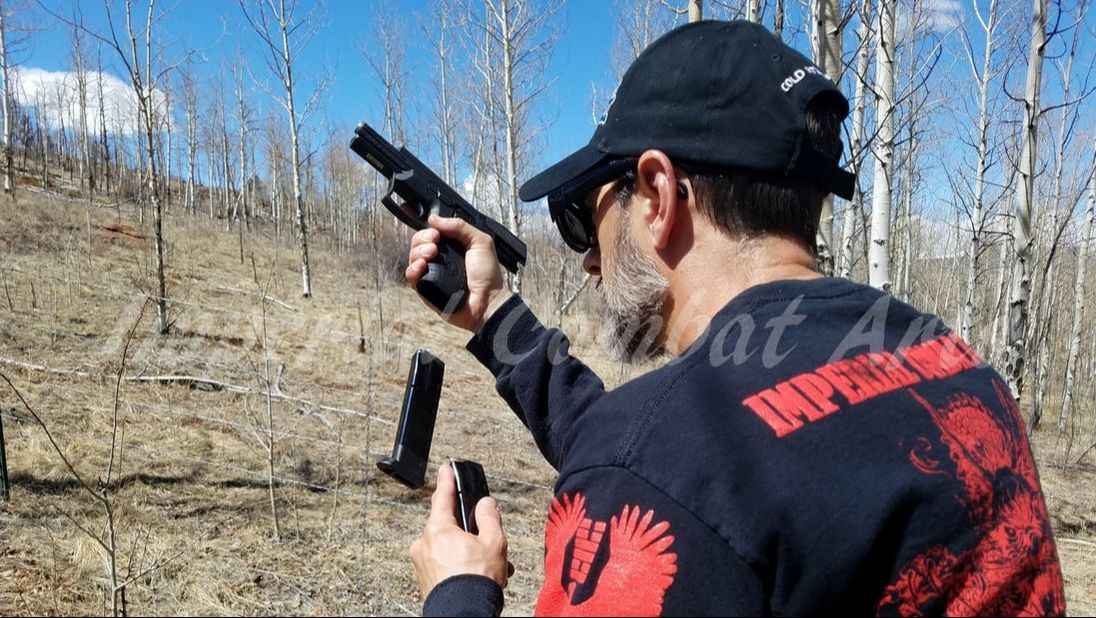
HANDGUN FUNDAMENTALS
Training includes:
• Grip and structural alignment
• Stance and recoil management principles
• Presentation from ready positions
• Reload mechanics
• Malfunction response concepts
• Low-light handling awareness
Advanced students train movement drills, use-of-cover positioning, and partner-based scenario work using non-lethal platforms.
• Grip and structural alignment
• Stance and recoil management principles
• Presentation from ready positions
• Reload mechanics
• Malfunction response concepts
• Low-light handling awareness
Advanced students train movement drills, use-of-cover positioning, and partner-based scenario work using non-lethal platforms.
SCENARIO TRAINING
Students engage in controlled scenario exercises that develop:
• Decision making under stress
• Situational awareness
• Communication
• Use-of-cover assessment
• Tactical movement patterns
Force-on-force simulations are conducted using non-lethal training systems to reinforce safety and judgment.
• Decision making under stress
• Situational awareness
• Communication
• Use-of-cover assessment
• Tactical movement patterns
Force-on-force simulations are conducted using non-lethal training systems to reinforce safety and judgment.
MOVEMENT & POSITIONING
Unlike static range training, our program emphasizes:
• Shooting while moving
• Use of barricades
• Environmental awareness
• Angles and line control
• Close-quarters positioning
These principles align with our martial structure and multi-opponent awareness training.
• Shooting while moving
• Use of barricades
• Environmental awareness
• Angles and line control
• Close-quarters positioning
These principles align with our martial structure and multi-opponent awareness training.
CLOSE-QUARTER INTEGRATION
Firearms proficiency does not replace empty-hand skill.
Students train:
• Weapon retention awareness
• Distance management
• Structural control principles
• Transition between empty-hand and defensive tools
This integrated approach reflects real-world proximity concerns where movement and control are critical.
Students train:
• Weapon retention awareness
• Distance management
• Structural control principles
• Transition between empty-hand and defensive tools
This integrated approach reflects real-world proximity concerns where movement and control are critical.
LIVE-FIRE POLICY
Imperial Combat Arts does not conduct live-fire training on site.
Students seeking live-fire experience are referred to qualified instructors and licensed ranges.
This ensures:
• Proper safety compliance
• Insurance coverage
• Professional supervision
Our curriculum focuses on the mechanical and structural foundation that supports responsible live-fire practice
Students seeking live-fire experience are referred to qualified instructors and licensed ranges.
This ensures:
• Proper safety compliance
• Insurance coverage
• Professional supervision
Our curriculum focuses on the mechanical and structural foundation that supports responsible live-fire practice
WHO IS THIS TRAINING FORM
• Martial artists integrating defensive tools
• Individuals seeking safe handling proficiency
• Students interested in movement-based firearms mechanics
• Those who value disciplined, structured instructio
• Individuals seeking safe handling proficiency
• Students interested in movement-based firearms mechanics
• Those who value disciplined, structured instructio
PHILOSOPHY
Firearms are treated as defensive tools requiring:
• Discipline
• Restraint
• Mechanical precision
• Ethical responsibility
Proficiency is built through repetition, structure, and controlled progression — not spectacle.
• Discipline
• Restraint
• Mechanical precision
• Ethical responsibility
Proficiency is built through repetition, structure, and controlled progression — not spectacle.
|
|
|